
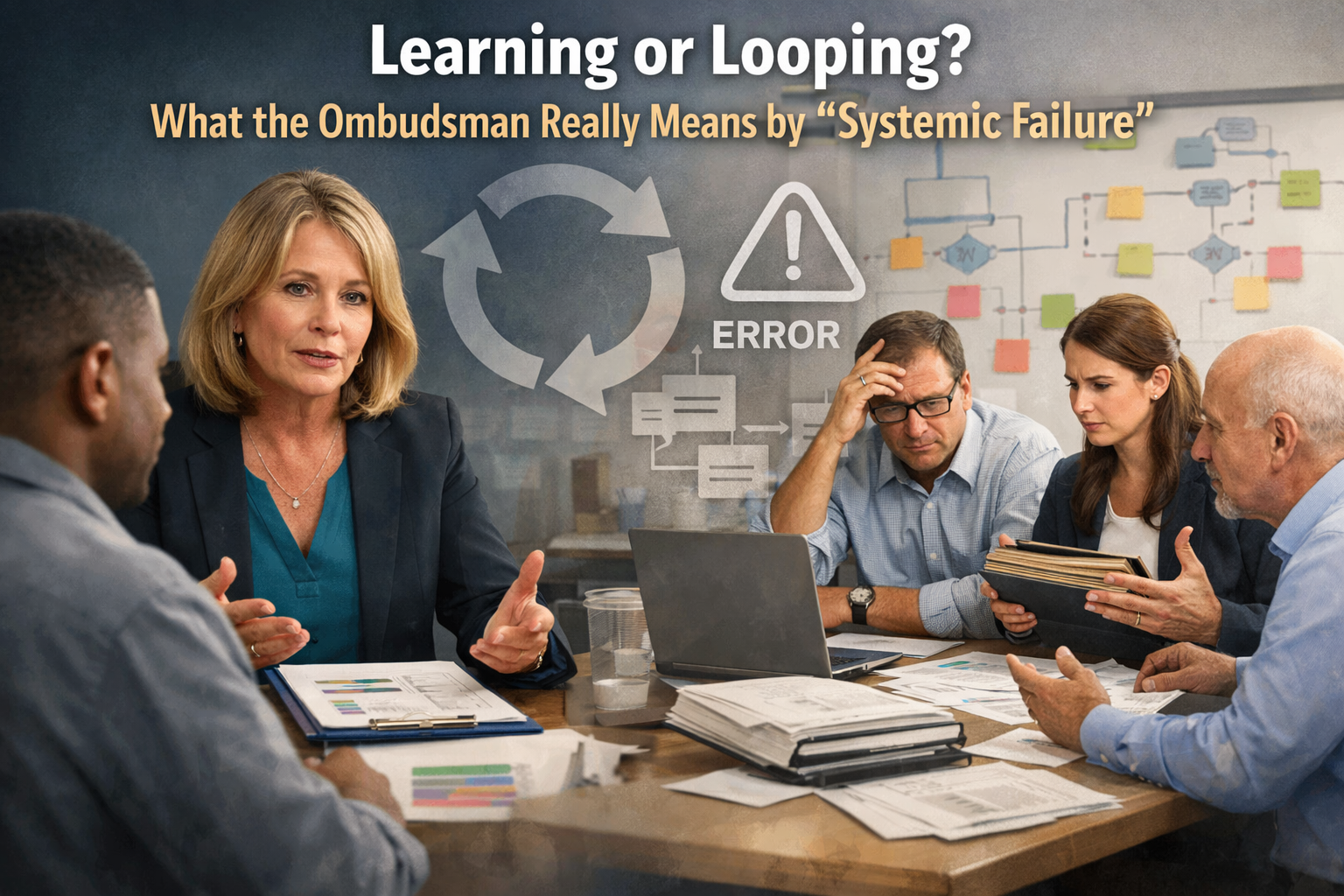
When the Housing Ombudsman talks about systemic failure, it’s tempting to hear it as a criticism of one bad decision, one missed appointment, or one unhappy resident. But that’s not what the Ombudsman means. Systemic failure is not about a single mistake — it’s about patterns. And patterns tell a much more uncomfortable story about whether the sector is truly learning, or simply looping.
Time and again, Ombudsman reports highlight the same themes: poor communication, delays in repairs, weak complaint handling, unclear ownership, and a failure to put things right at the first opportunity. These are not new issues. In fact, many organisations have action plans, lessons-learned logs, and training programmes that say exactly the right things. Yet the findings keep coming.
So what’s going wrong?
From Isolated Errors to Embedded Problems
Systemic failure is what happens when an organisation treats each complaint as a one-off rather than a signal. A leak is fixed, but the resident is not updated. An apology is issued, but the root cause is not addressed. A compensation payment is made, but the process that caused the delay remains unchanged.
From the Ombudsman’s perspective, this is not resolution — it’s repetition.
The warning signs are clear. When the same service areas appear in complaint findings year after year, when similar failures occur across different teams or estates, and when residents repeatedly describe feeling ignored or dismissed, the issue is no longer operational. It’s cultural.
Why “Lessons Learned” Often Don’t Stick
Many organisations are good at documenting lessons but less effective at embedding them. Learning becomes a report, a slide deck, or a standing agenda item — not a change in behaviour.
One reason is that complaints are still too often seen as a reputational risk rather than a diagnostic tool. The instinct is to close cases quickly, manage exposure, and move on. But speed without reflection simply accelerates the loop.
Another reason is ownership. If learning sits only with the complaints team, it never truly reaches repairs, housing management, contractors, or senior leadership in a way that changes day-to-day decisions. The Ombudsman is clear: learning must be organisational, not departmental.
What the Ombudsman Is Really Asking For
When the Ombudsman calls out systemic failure, they are asking a deeper question: what changed as a result?
Not “what policy was updated?”, but:
- What will staff do differently tomorrow?
- How will residents experience an improvement next time?
- How will you know the same failure won’t happen again?
This is where many organisations fall short. They evidence activity, not impact. They show intention, not transformation.
True learning means closing the loop visibly — telling residents what went wrong, what changed, and what difference it has made. It means using complaints to challenge assumptions, redesign processes, and test whether new approaches actually work in practice.
Breaking the Loop
Breaking systemic failure requires honesty and humility. It requires leaders to ask uncomfortable questions about culture, capacity, and priorities. And it requires creating space for staff and residents to explore why failures happen, not just how to respond to them.
Because the Ombudsman is not asking for perfection. They are asking for progress — and progress only happens when learning replaces looping.
So perhaps the question every organisation should be asking is this:
When the Ombudsman looks at our next complaint, will they see evidence that we learned — or proof that we simply went round the loop once again?