
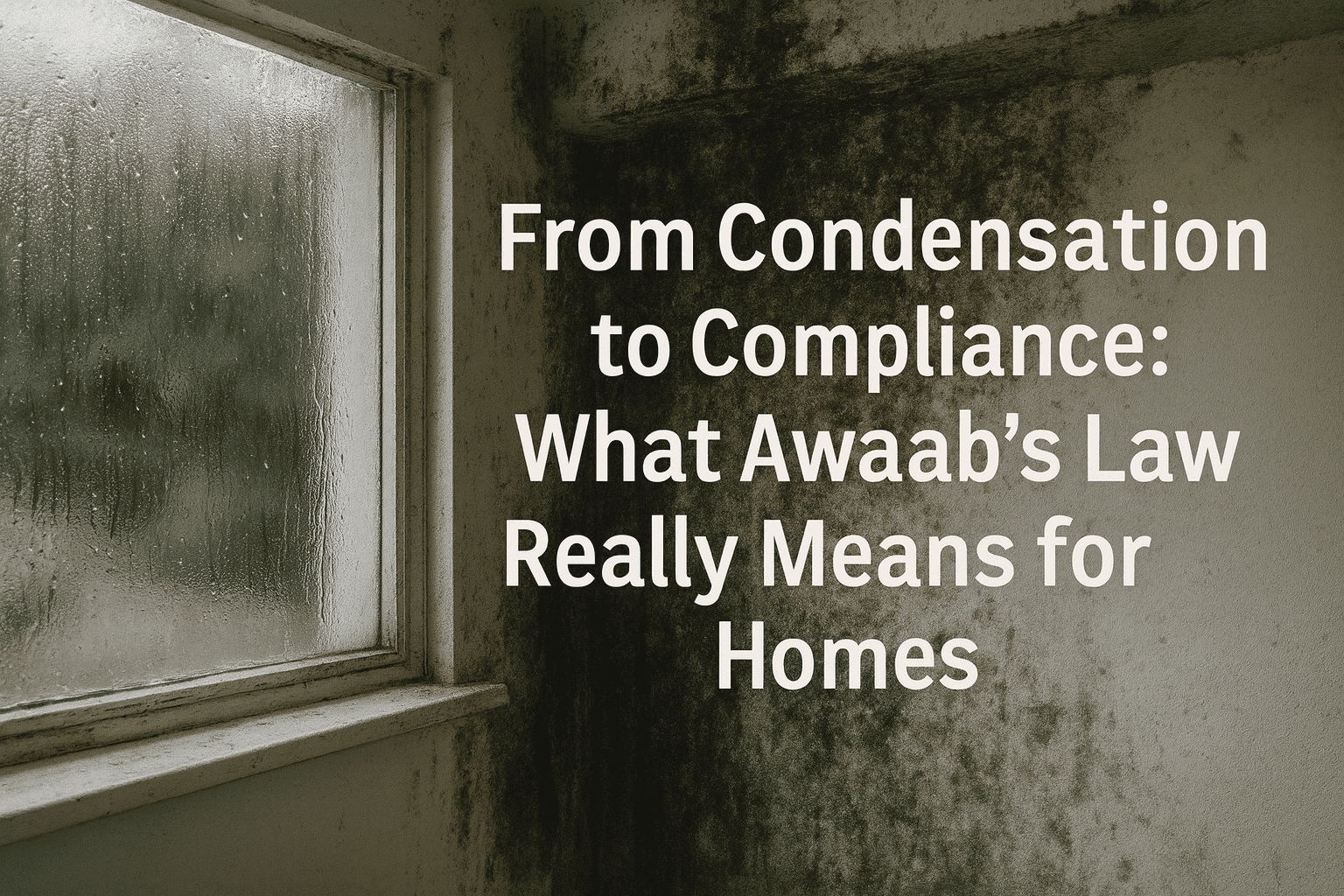
For many households, condensation on the windows is simply part of daily life. It’s a sign of a warm kitchen, a busy morning, or clothes drying indoors. Yet behind these small details can lie a much bigger problem — one that has too often been ignored or misunderstood.
The death of two-year-old Awaab Ishak in 2020 exposed the devastating consequences of failing to act on damp and mould. His story shook the nation and led to the creation of Awaab’s Law – a new legal duty designed to ensure that social landlords investigate and resolve hazards like damp and mould within strict timescales.
But Awaab’s Law isn’t only about compliance. It’s about culture. It’s about restoring trust, rebuilding communication, and recognising that every home should be safe, healthy, and fit for living.
From Blame to Understanding
For years, damp and mould have been shrouded in misunderstanding. Too often, residents have been blamed — told to “open a window”, “turn up the heating”, or “wipe it away”. This language not only shifts responsibility, it also deepens shame and discourages people from speaking up.
In truth, the causes of damp and mould are complex. Yes, lifestyle can play a role, but structural issues, poor insulation, inadequate ventilation, and delayed repairs are far more significant factors. Awaab’s Law demands that landlords take these issues seriously and treat every report as a health and safety concern, not a household complaint.
The Human Side of Compliance
The law sets out clear timescales for inspection, repair, and communication — but legislation alone won’t change lives. What truly matters is how organisations put empathy and transparency at the heart of their response.
Residents need to understand what’s happening, when it will be fixed, and what steps are being taken to prevent recurrence. Communication must be in plain English, free from jargon or blame. For some, information may need to be translated or delivered in alternative formats such as Easy Read or audio. Compliance isn’t simply ticking boxes; it’s building confidence.
From Condensation to Collaboration
Initiatives like Bee The Change show how creative engagement can shift the culture of housing.
Through workshops and Collaboration Rounds, landlords and residents are exploring how to talk about difficult issues like damp and mould in safe, balanced ways. These conversations challenge stigma, build empathy, and turn policy into shared responsibility.
By listening to lived experience, landlords gain insight into what works — and what doesn’t. Residents, in turn, feel heard and respected. It’s a powerful step from compliance to collaboration, from enforcement to empowerment.
Looking Ahead
Awaab’s Law is a landmark in housing reform — but it’s also a reminder that legislation cannot replace humanity. The true measure of success won’t be found in how fast we close cases, but in how we rebuild trust, repair relationships, and restore dignity.
Because when a home is damp, it’s not just the walls that suffer — it’s the wellbeing of the people inside.
So, as we step into this new era of responsibility, one question remains:
Will Awaab’s Law make us simply compliant landlords — or compassionate ones who never again let silence become fatal?