
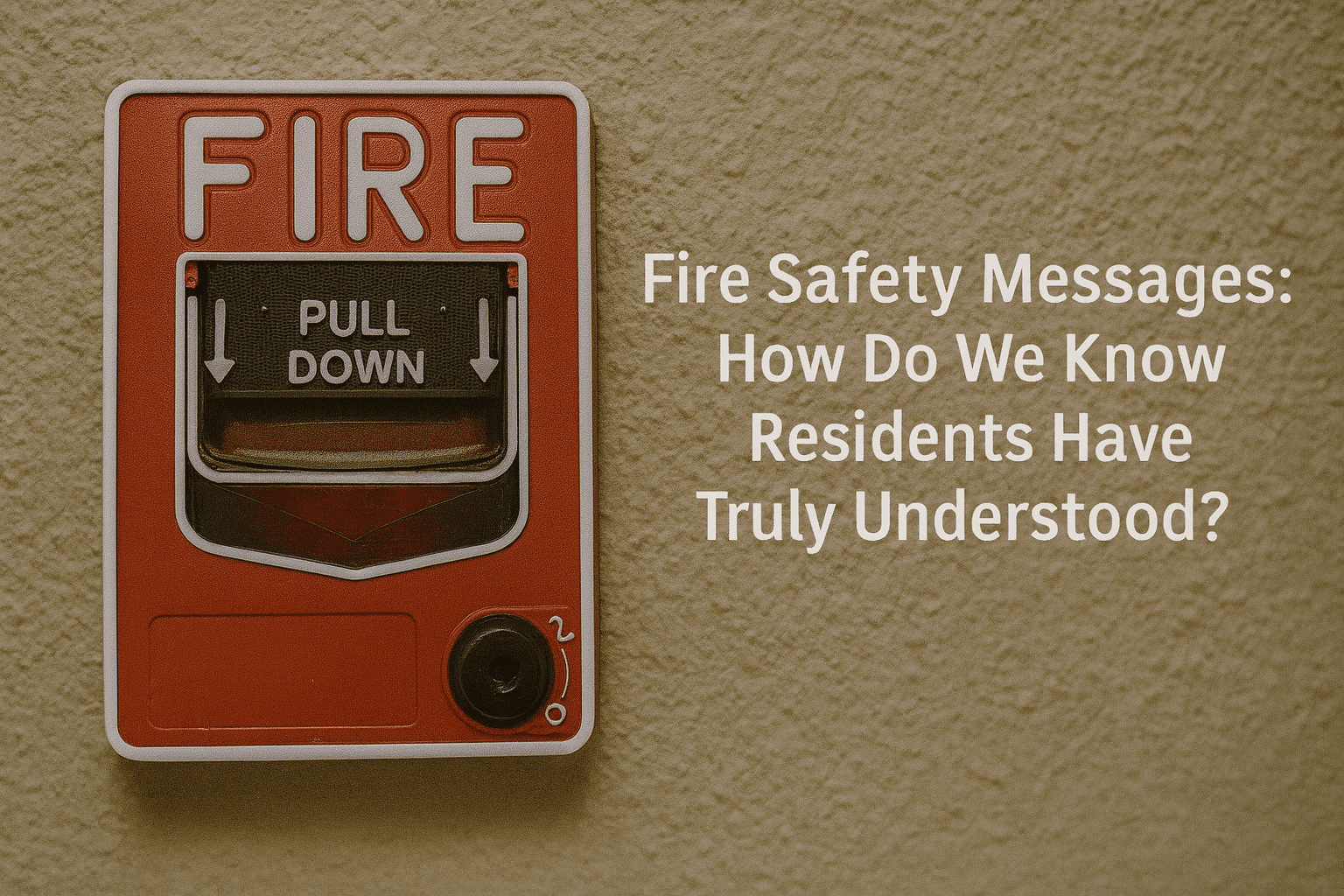
Every housing organisation talks about fire safety — yet too often, those messages don’t land where they matter most: in residents’ minds, hearts, and daily habits. We can print posters, send letters, post updates online, and even host safety events, but the question remains — has the message really been understood?
In the wake of Grenfell and the Building Safety Act, the housing sector has rightly invested in compliance, communication, and culture change. But genuine safety isn’t achieved through paperwork or PowerPoint slides. It’s achieved when every person living in a building not only knows what to do, but believes it’s relevant to them.
The Gap Between Message and Meaning
When residents tell us they’ve received information, it doesn’t always mean they’ve understood it. Technical language, inconsistent messages between teams, or a lack of translation can all cause confusion. Add in low literacy levels, digital exclusion, and language barriers, and even the clearest intentions can get lost.
A “Stay Put” notice might make sense to one person and trigger anxiety in another. A diagram of escape routes can look obvious on paper but unclear in a smoke-filled corridor. Fire door signs may fade into background noise.
True understanding means going beyond distribution to comprehension. Are messages accessible? Are they repeated in different formats — digital, written, face-to-face? Do they resonate with lived experience?
Listening as Part of Safety
Safety communication has traditionally been one-way — from landlord to resident. But meaningful engagement turns that on its head. It’s not just about telling people what to do, but asking them what they need to feel safe.
This is where initiatives like Bee The Change are leading a quiet revolution. Through collaborative play and honest discussion, residents explore real-life fire safety scenarios, question assumptions, and share their own experiences. In these sessions, the tone shifts from instruction to understanding — from “we tell” to “we listen.”
By co-designing fire safety messages with residents, landlords uncover what works: clear visual guides, translated leaflets, or short videos explaining checks and evacuation plans in plain English. Equally, they find out what doesn’t — technical jargon, inconsistent follow-up, and the assumption that everyone processes information in the same way.
Clarity Builds Confidence
When residents understand why safety measures exist — not just what they are — compliance becomes collaboration. Explaining why fire doors must stay shut, or how personal evacuation plans save lives, turns rules into shared responsibility.
Fire safety is not only about regulation; it’s about reassurance. It’s about ensuring that every message is not just read but felt — by residents of every age, background, and ability.
From Information to Impact
Measuring understanding is harder than measuring delivery. It requires listening sessions, follow-up surveys, or creative workshops that explore what residents truly know and believe. It also requires humility — accepting that even well-intentioned communication may need to change.
The aim is not just compliance with the Fire Safety (England) Regulations, but a culture where residents and landlords see themselves as partners in prevention.
Because real safety doesn’t live in documents — it lives in the decisions people make when danger strikes.
So perhaps the real question isn’t “Have we told residents enough?”
It’s this: “Have we earned their confidence enough for them to act when it truly matters?”